
What Causes Crawl Space Moisture?
Ground Moisture
Moisture naturally rises from exposed soil and can increase humidity inside the crawl space.
Outside Humidity
Warm, humid outside air entering the crawl space can create condensation on cooler surfaces.
Standing Water & Drainage
Leaks, groundwater, flooding, or poor drainage can introduce significant moisture beneath the home.
Condensation
Moisture can collect on ducts, pipes, framing, and other crawl-space materials when conditions are humid.
What Moisture Can Lead To
Musty Odors
Persistent odors may indicate excess crawl-space moisture or mold.
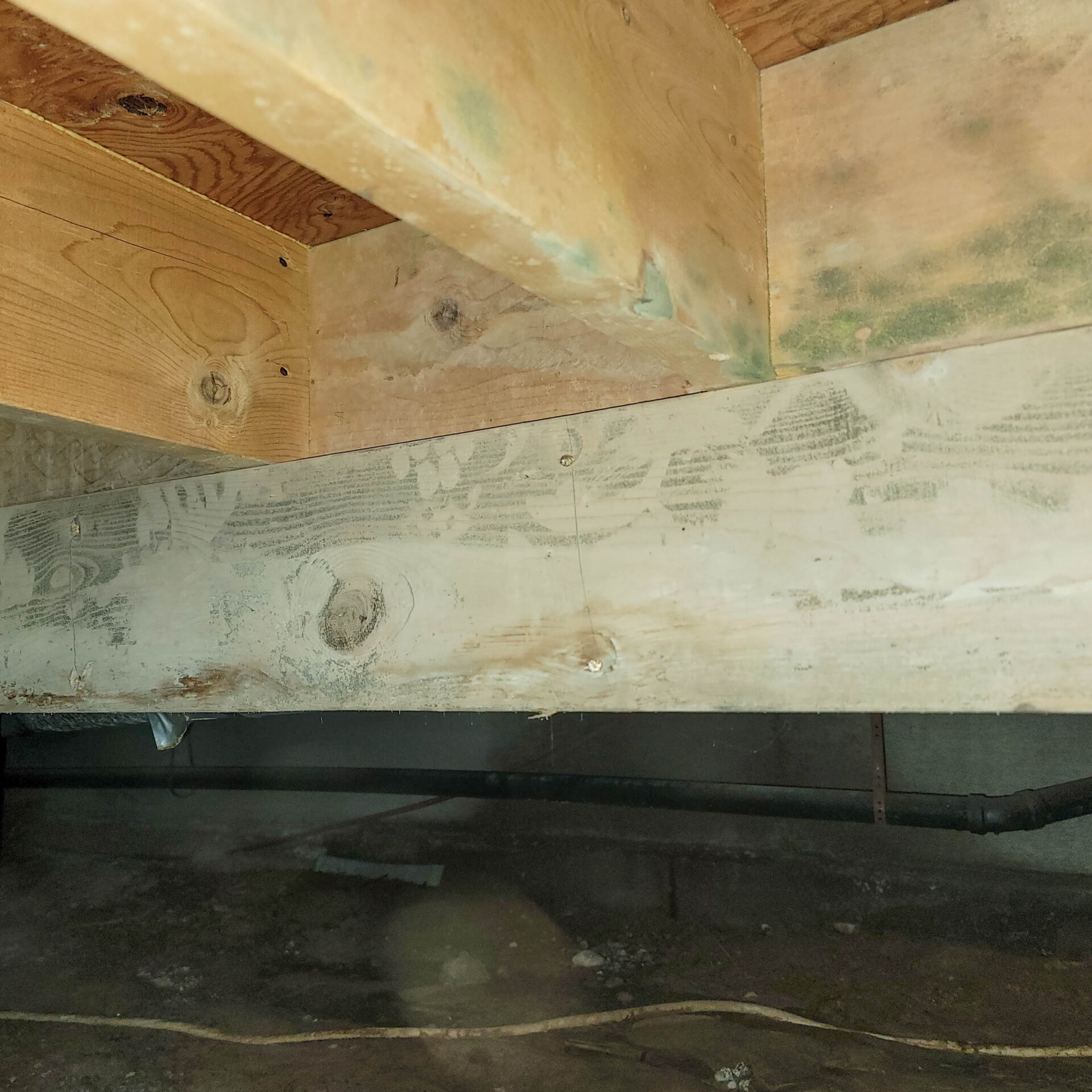
Visible Mold
Mold may appear on wood framing, subflooring, insulation, or other crawl-space materials.
Wood Deterioration
Long-term moisture can contribute to deterioration of wooden crawl-space components.
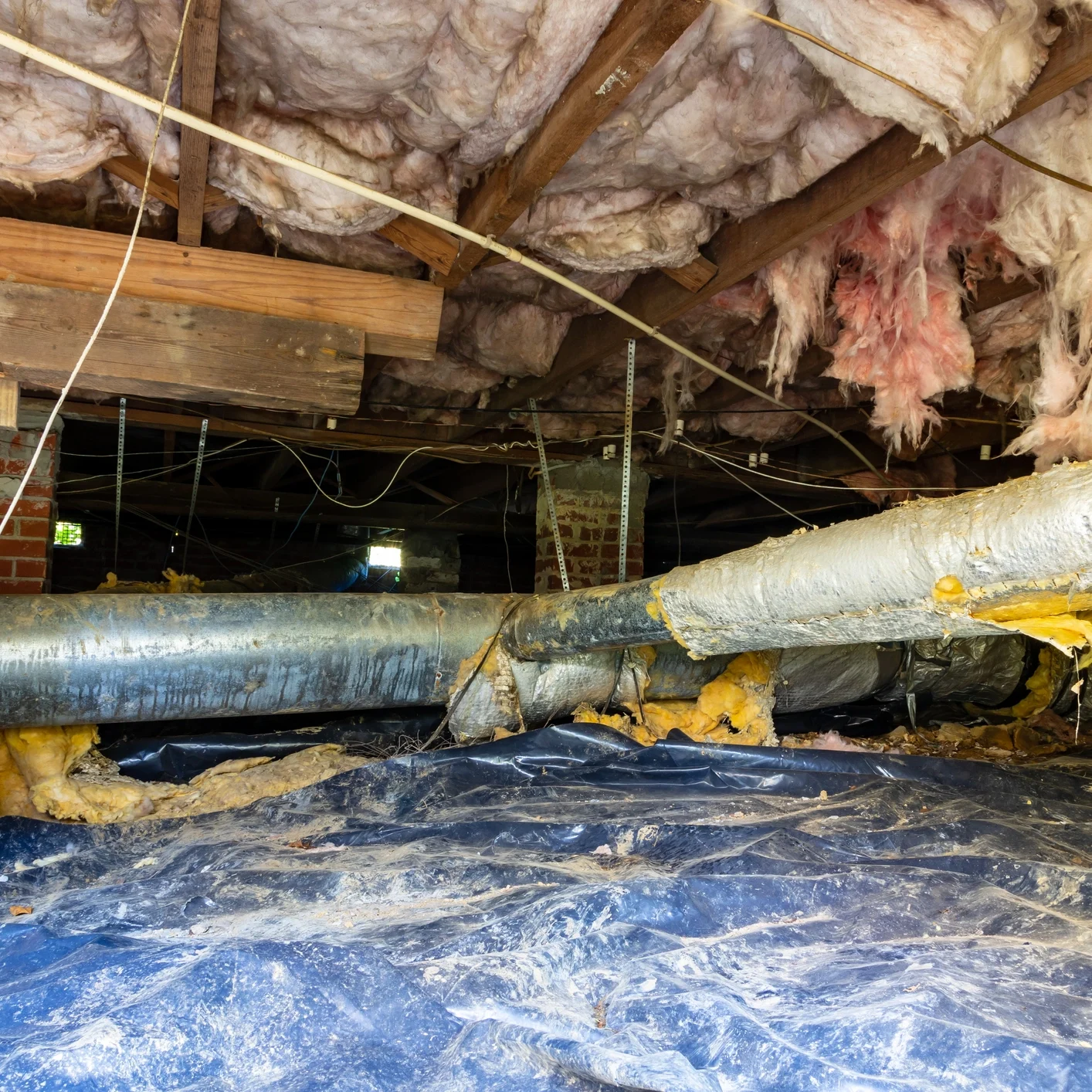
Damaged Insulation
Wet, hanging, or deteriorated insulation can indicate ongoing moisture.
High Humidity
Excess humidity creates conditions where crawl-space mold can develop
Standing Water
Water beneath the home should be investigated to determine where it is coming from.
Common Types of Crawl Space Mold
Black Mold
A general term often used for dark-colored mold that may develop on damp crawl-space materials.
White Mold
Often appears white or grayish and can develop in cool, damp crawl-space conditions.
Aspergillus
A mold that can grow on materials such as wood and insulation and is commonly associated with damp environments.
Stachybotrys Chartarum
A dark mold associated with persistently wet materials and one that should be professionally evaluated.
Why Moisture Control Matters
Controlling Moisture Is the Key
Removing visible mold alone does not address the conditions that allowed it to grow. Controlling crawl-space moisture helps create an environment that is less favorable for future mold growth and protects the materials beneath your home.
How Crawl Space Encapsulation Helps
Encapsulation creates a more controlled environment beneath the home by separating the crawl space from sources of moisture. The exact solution should be based on the conditions discovered during the crawl-space inspection.
Encapsulation Process

Crawl Space Inspection
Identify moisture, mold, water intrusion, damaged insulation, wood conditions, and other concerns.

Customized Protection Plan
Determine which moisture-control and encapsulation components are appropriate.

Professional Installation
Address existing conditions and install the recommended encapsulation/moisture-control system.

Final Inspection
Review the completed crawl space and verify that the recommended work has been completed.