
By HomeShield Restoration · Updated
What's the difference between crawl space encapsulation and a vapor barrier?
A vapor barrier is a sheet of plastic laid over the crawl space floor to slow moisture rising from the soil. Encapsulation is a broader approach that lines the ground and walls, seals the space off from outside air, and manages humidity inside it. So the real difference in crawl space encapsulation vs a vapor barrier is scope. One is a single layer aimed at one moisture source. The other is a coordinated system meant to control conditions in the whole space. Neither is automatically right for every house, and the label on a proposal matters less than what the written scope actually covers.
What does a vapor barrier actually do?
Bare soil gives off moisture vapor all the time, even when the surface looks dry. In the Sandhills, sandy soil drains quickly after rain, but the ground under a house still releases vapor into the crawl space. A vapor barrier limits that by putting a layer between the soil and the air. It doesn't stop humid outdoor air from coming in through vents, and it doesn't deal with water that runs in from outside or drips from plumbing. In a crawl space where ground vapor is the main issue and everything else is in decent shape, a well-installed barrier can make a real difference.
Why do coverage, seams, and penetrations matter?
A vapor barrier only works where it actually covers the ground. Gaps at the edges, loose overlaps, torn sections, and open spots around piers and pipes all let vapor through. It's common to find older barriers that were laid down loose and then pushed around by service technicians, animals, or water until a good part of the soil was exposed again. When you compare options, ask how far the material extends, whether seams are overlapped and sealed, and how penetrations around piers, posts, and pipes are handled. A thin sheet with large gaps can look like coverage in a photo while doing very little.
What does crawl space encapsulation include?
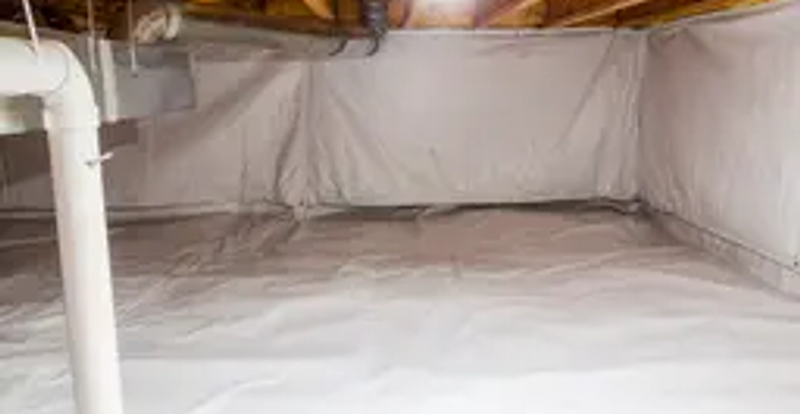
Encapsulation usually means a continuous liner across the ground and up the foundation walls, sealed seams, closed vents and openings, and some way to manage humidity in the now-enclosed space. Where water gets in, it may also include drainage or other water management. The catch is that encapsulation isn't one fixed package. One company's version might include wall coverage and humidity control, while another's might be a heavier floor liner and a few sealed vents. The word alone doesn't tell you what you're paying for. Read the scope and look for each piece by name.
Is encapsulation better than a vapor barrier?
It depends on what's happening under the house. Encapsulation addresses more moisture sources at once, which is why it's often the stronger choice when a crawl space has humid air, sweating ducts, damp insulation, and exposed soil all together. North Carolina summers bring long stretches of hot, humid air, and in a vented crawl space that air can condense on cooler surfaces. A vapor barrier alone won't stop that. On the other hand, a home with a fairly dry space and only minor ground vapor might not need a full system. An on-site assessment should show which situation you're in.
Will either one fix a wet crawl space?
Not if the water has a source nobody has found. A liner over a leaking drain line, or over a spot where rainwater runs in, hides the problem and can trap water under the plastic. Plumbing leaks, gutter discharge near the foundation, and ground that slopes toward the house all need their own fix. Sometimes that's a quick plumbing repair. Sometimes it's drainage work. Either way, the water source should be diagnosed before or alongside the liner work. A useful proposal says what was found and how it's being handled, not just which liner is going in.
How much does encapsulation cost compared to a vapor barrier?
A basic vapor barrier is usually a smaller scope than full encapsulation, and the price reflects that. At HomeShield Restoration, typical restoration projects run around $8,000 to $12,000, and some smaller scopes come in around $2,000. Those numbers are planning examples, not quotes, because size, access, existing conditions, and water issues all change the price. Guarantees differ too. Qualifying full encapsulations carry a 25-year guarantee, and qualifying partial encapsulations carry a 10-year guarantee, both subject to written terms. Whoever you talk to, ask to see what their guarantee covers in writing.
How should I compare written scopes?
Put the proposals side by side and check the same items in each: how much ground and wall area the liner covers, how seams and penetrations are sealed, which vents and openings are closed, how humidity will be managed, what's done about water entry, and what's excluded. Ask about maintenance and who you call if something changes later. If one quote is much lower, find out which of those items it leaves out. Photos and video from the inspection help here, because they let you see the conditions each plan is supposed to address.
Where can I get a crawl space assessment in Moore County?
If you're weighing a vapor barrier against encapsulation, start with what's actually under your house. HomeShield Restoration is a locally owned crawl space company in Aberdeen serving Pinehurst, Southern Pines, and the rest of Moore County. We document each inspection with photos and video and give you a written scope that says what's included and what isn't. Sometimes a smaller scope is enough, and we'll tell you if that's the case. You can request an inspection online or call (910) 702-2400.
General educational information. It is not a structural, environmental, or medical evaluation. Recommendations for your property require an on-site assessment.
Get Answers About My Home ↗