
By HomeShield Restoration · Updated
What causes mold in a North Carolina crawl space?
Mold grows in a crawl space when moisture stays on materials it can feed on, such as wood framing, subfloor, paper-faced insulation and stored cardboard. In North Carolina that moisture usually comes from several places at once: exposed soil, humid outdoor air, condensation and leaks or water that gets in during storms. Mold spores are present almost everywhere, so the real question is whether the space stays damp long enough for growth to take hold. That is why a useful inspection looks at the moisture first and the visible growth second. If the source is never found, cleaning tends to buy time rather than solve the problem.
How does exposed soil add moisture under the house?
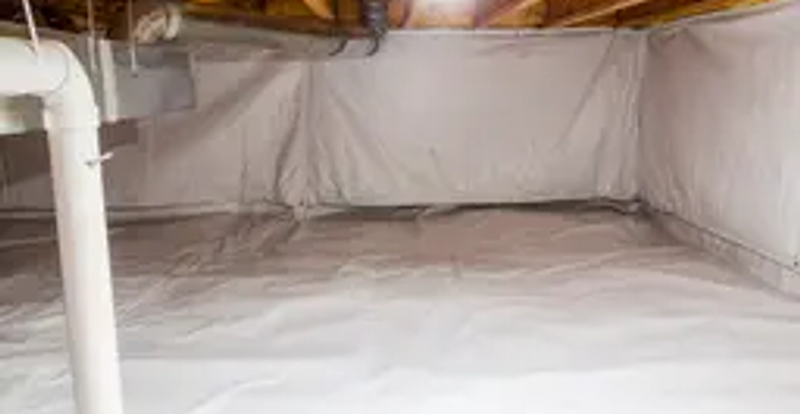
Bare dirt in a crawl space is rarely as dry as it looks. Soil holds water and releases it into the air above as vapor, day and night, whether or not you ever see a puddle. In a closed, shaded space with little air movement, that vapor has nowhere to go, so it raises the moisture level around the joists, sill plates and insulation. A thin or torn plastic sheet over part of the ground helps less than many homeowners expect. Gaps, seams and uncovered areas still let vapor through, and older liners are often damaged by foot traffic or service work.
Why does humid air lead to condensation in a crawl space?
North Carolina summers are hot and humid. When that warm, damp air drifts into a crawl space through vents and gaps, it meets surfaces that are cooler, like air conditioning ducts, cold water pipes and framing close to the ground. Warm humid air that touches a cooler surface can drop its moisture as condensation, the same way a cold glass sweats on a summer porch. Over weeks, that repeated wetting can dampen wood and insulation enough for mold to grow. Even in the Sandhills, where sandy soils tend to drain quickly at the surface, the air under a house can still carry plenty of moisture through the warm months.
Can leaks and water entry cause crawl space mold?
Yes. A slow drip from a supply line, a loose drain connection or a leaking appliance line can keep one area wet for months before anyone notices. Water can also come in from outside. Gutters that spill next to the foundation, downspouts that empty too close to the house and soil that slopes toward the walls can all send water into the crawl space after heavy rain. When water entry repeats every time it storms, materials never get the chance to dry out. In many homes, leaks, ground moisture and humid air are all contributing at the same time, which is why a single fix often falls short.
Can I tell what kind of mold it is from the color?
No. Color is not a reliable way to identify a mold species, and black, white, green or gray growth can each be many different things. Photos are helpful for documenting where growth is and how much material is affected, but a photo cannot establish anyone's exposure or predict a health outcome. If you want to know more about what is present, ask a qualified professional whether testing makes sense for your situation and what the results could and could not tell you. For most crawl spaces, the more practical questions are where the moisture is coming from and which materials have been affected.
Why does mold come back after it has been cleaned?
Cleaning or treating visible growth without changing the conditions that caused it leaves the door open for it to return. If the soil is still exposed, humid air still condenses on ducts or a leak is still dripping, the same materials will get damp again and growth can follow. This is one of the most common reasons homeowners feel they paid for a fix that did not last. A plan that pairs remediation with moisture control, such as addressing water entry, covering the ground or managing humidity, gives the work a better chance of holding up over time.
What should a crawl space mold remediation plan include?
A good plan should be written down and specific enough that you can follow it. It should explain how affected materials will be handled, cleaned or removed, and how the work area will be isolated from the rest of the house. It should describe access precautions for the crew and for your living space. Most important, it should include the moisture-control step that addresses why the mold grew in the first place. At HomeShield Restoration we provide detailed photo and video documentation of our inspections, so you can see the conditions yourself and compare them against the proposed scope before you decide anything.
What if I am worried about mold and my health?
If you have health concerns related to mold, talk with a doctor or another medical professional. A crawl space contractor can describe what they see under the house, document affected materials and explain the repair scope, but that is not medical advice and should not take its place. Keeping those two conversations separate helps you get accurate answers on both. Your medical provider can address symptoms and risk, and a qualified crawl space company can address the moisture and the materials.
Scheduling a crawl space inspection in Moore County
If you have noticed musty odors, damp insulation or visible growth under your home in Aberdeen, Pinehurst, Southern Pines or elsewhere in Moore County, an on-site assessment is the next sensible step. Signs like these are clues, not a diagnosis. We will document what we find and give you a clear written scope. Bring any notes or photos you have, and we can walk through the findings together. You can request an inspection online through our schedule page or call (910) 702-2400.
General educational information. It is not a structural, environmental, or medical evaluation. Recommendations for your property require an on-site assessment.
Get Answers About My Home ↗